The story
A tradition of scholarship since 1886
Established as a centre for British research in the Greek world, the School has grown from a single house into an international institute for excavation, science, teaching and cultural exchange.
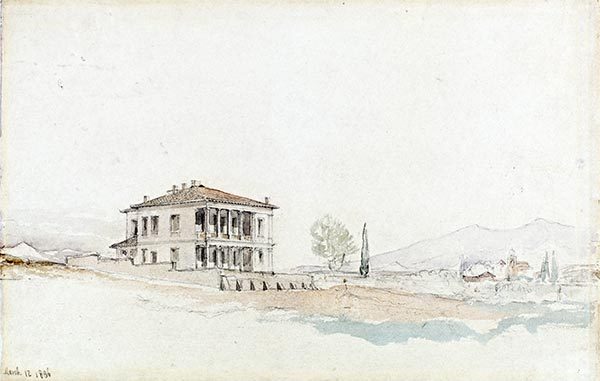
The BSA, 1886. Watercolour sketch by Francis Penrose
I
1886
Founded in Athens
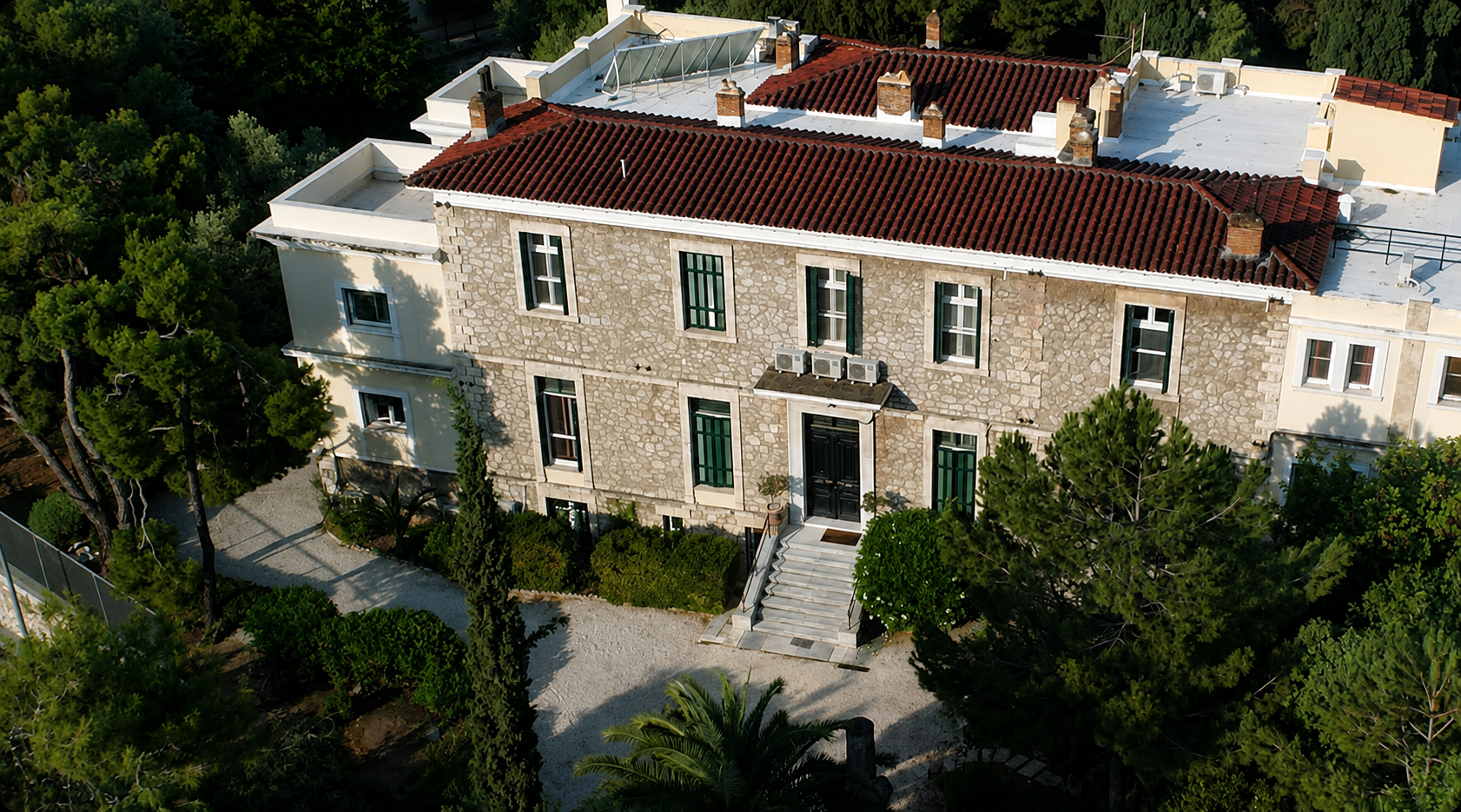
Since 1886 the British School at Athens has been a focus for British research on the Greek world, from prehistory to the present, across the arts, humanities and social sciences. The first building was designed by Francis Cranmer Penrose; the School now comprises a hostel, library, archive and the Fitch Laboratory.
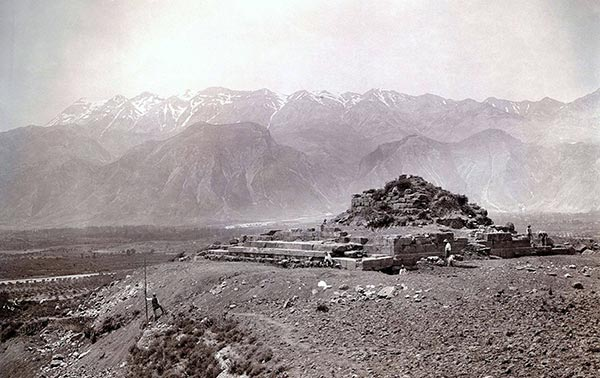
The Menelaion and Mt Taygetos, 1909.
II
1886–1900
Archaeology across the Greek world
The BSA is known for archaeological research at Knossos, Sparta, Mycenae and many other sites in the eastern Mediterranean. Fieldwork has included excavation, systematic regional survey, and new scientific techniques as they became available.
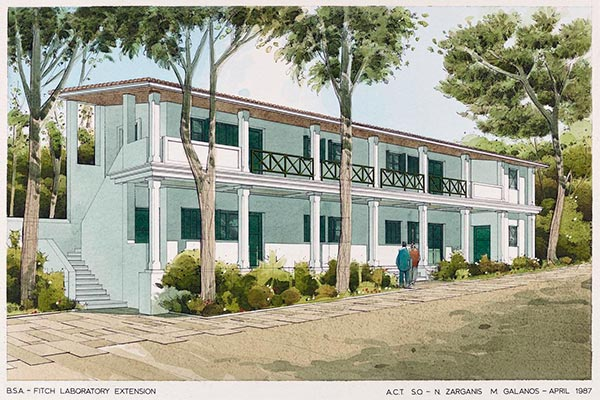
Fitch Laboratory, 1987 sketch.
III
1974
The Marc and Ismene Fitch Laboratory
Science-based archaeology was established at the BSA in 1974, when the Fitch Laboratory opened with Richard Jones as its first Fellow. Ceramic petrology and chemical analysis remain at the centre of its work.
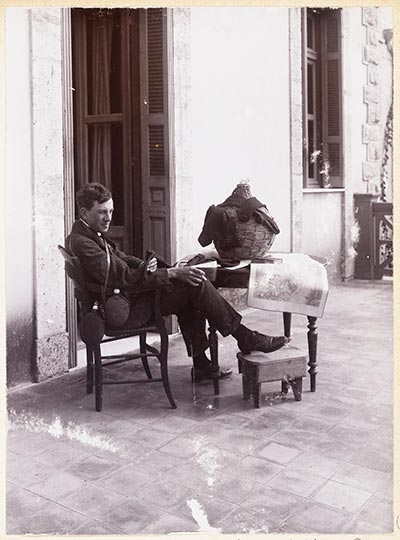
A. Toynbee, Finlay terrace, 1911–12.
IV
1900–2001
Art, architecture and the Byzantine Fund
Alongside excavation, the School developed a tradition of architectural recording and Byzantine studies. The Byzantine Research Fund archive remains one of its most important visual collections.
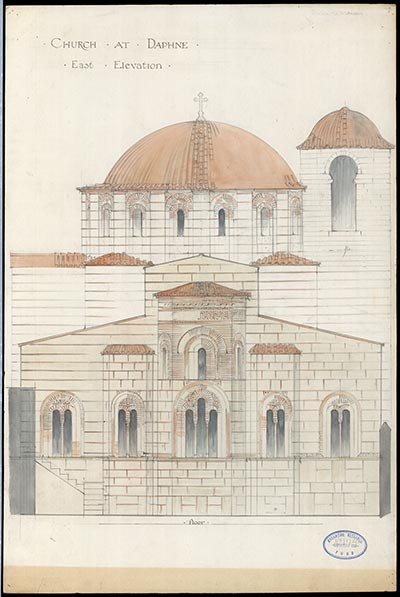
Daphni monastery, Byzantine Research Fund, BSA Archive.
V
1986–present
Library, archive and collections
The library, archive and museum collections now form a living research infrastructure — rare books, excavation records, photographs and scientific reference collections connecting more than a century of fieldwork to current questions.
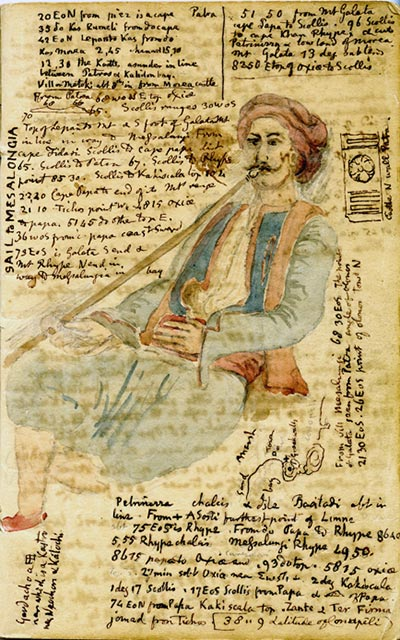
From a notebook of Sir William Gell, BSA Archive.
VI
Today
A centre for international scholarship
The BSA continues to support fieldwork, laboratory science, taught courses and fellowships. It remains a meeting point for researchers from the UK, Greece and further afield, with a research centre at Knossos as well as the Athens hostel, library and laboratory.